Acts of care, protest, reclaiming space
Resistance & Echoes
By Maša H.
If I’ve ever experienced the most complex and layered emotions, it was through the experience of motherhood. A deep sense of responsibility often came flavoured with guilt and questions: Am I good enough? Can I give more—of myself, my time, my space? Do I give enough?
Every evening, I found myself in quiet dialogue with these thoughts, wondering if I was rising to the task. These inner conversations became part of my daily life, especially during the pandemic—when the world outside was silent, and the weight of care fell even heavier inside.
This work was gently shot during that time. It includes tender, open conversations between my son and me. It wasn’t easy—he rarely saw his father during that period, and the emotional complexity of it all was heavy for both of us. Yet he was brave enough to speak with honesty and depth, expressing things many adults struggle to name.
His courage moved me. In many ways, he became my greatest teacher.
Motherhood
The Pandemic
By Maša H.
During the pandemic, my son and I spent days, and weeks without seeing another adult or child. The loneliness of single motherhood had never felt more intense or more unbearable. Time became almost still—we moved through the motions of each day in a strange, suspended rhythm.
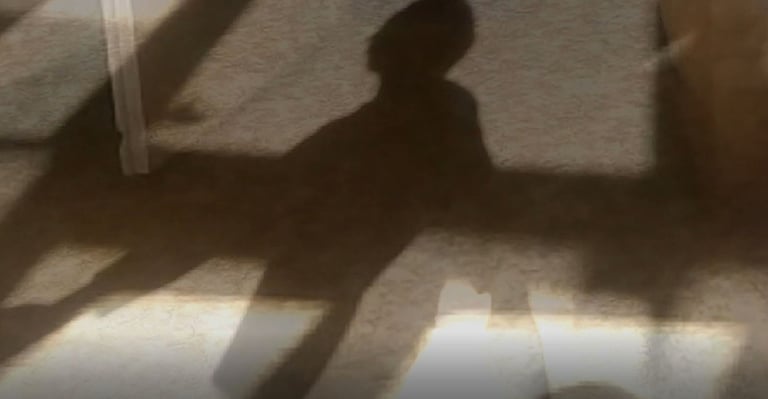
In this photo, I captured a moment of my son dancing through the shifting shadows and sunlight by the window, waiting patiently while I worked long hours. He played alone….I carried a deep sense of guilt—for not being able to be fully present, for letting him spend so much time alone. With no family nearby to offer support, the weight was heavy.
But through this experience, I learned how resilient we can be in the face of adversity. My son’s lightness amid such isolation reminded me that strength often grows quietly, in the background of our hardest days.
Descansos
By Eslem, 25
I have a strong belief that everything happens for a reason. That reason often leads to a significant change that will take place in the future. I've experienced similar events in my life that prove this belief is true.
For example, when I was 13, if the political climate in Turkey hadn’t started to become tense, I don't think I would have realized that I should become a journalist or study social sciences. I probably would have followed the typical path of someone from a science high school and chosen to become a doctor. Thank God, I am not a doctor—truly, thank God.
By Veronika, 47
She will know more about her dreams that stayed desires,
She will know more about rejections and fancy attires.
When she goes down the river.
She will know more about crossroads where she took the wrong turn.
She will have known the pain of a comment that stings like a burn.
She will know more about unsolicited lust,
She will know more about falling into one thousand pieces and not have a helping hand to rebuild her trust,
She will hate it all and crave for more,
when her ashes go down the river.
She will regret begrudge mourn all the moments filled with denial.
She will want them back regardless, they and only they were her real trial.
She will realize they were taken with her hopes down the river.
She will have known fleeing shivers of sheer joy.
She will be thankful and grateful and yet full of sorrow, for all the gifts and blessings and missed moments of love.
She will crave for more and rewind to the could-have-been bliss.
They tell you to seize the moment and capture the now. But they don't tell you all that you miss.
She may know what they meant as the stream takes her down the river.
She will have buried all the anger and pain deep in a lagoon of self pity and woe.
She will no longer ask Why me? and Who was in charge?
She will cry it out, and scream it out and stump her feet and grind her teeth all that it takes to take over the control of her life.
Open sores will be filled with love.
She asks for nothing more
when she goes down the river.
Down The River
Echoes of Silence
By Š.S.
The skeletons in our closet, behind an unlocked door,
Unspoken words, linger in the air,
The day our roles reversed, forevermore,
With a flare of despair.
Brand-new dishes shatter against the kitchen wall,
Once considered ‘suitable for special occasions’,
Black-and-white thinking, we brace for the fall.
She should have been a beloved daughter,
Yet became her mother´s mother,
Drowning in saltwater.
Emotionally bulletproof adult only at age of nine,
Comforting a soul of a child,
Lost in time.
My Personal Herstory
By Dagmar S.
For several years, I taught creative Female Monologues writing at the University of New York in Prague. Why Female Monologues? I was always interested to give voices to the ones who were not heard or never even given the spaces to be heard – so many women. My interest started in the stories of the women in my family. I often felt that they were strong, often painfully strong women who lived lives of absolute resilience. Their motto was one of survival rather than living. I would feel their ethos at many junctures in my life, not always knowing that it stemmed from our genetic belief system.
It would be best to start with my grandmother who lived a long life until she passed at the age of 95. When I think of her, I am reminded how little I knew of her feelings and inner struggles, but could feel her love to us, grandchildren. My life with her was more one without her because after the Prague spring in 1968 my mother, sister and little me left the Czech Republic (or better Czechoslovakia) to reunite with my father in the West who had fled 2 years prior. So, visits would be few, no more than once a year, short and regimented. I always viewed her as proud, defiant and strong with a sense of toughness which I would only later understand more fully. My grandmother experienced 5 political systems, saw the changes of times and how people would turn - sometimes for the worst- to grab their advantages in any new system they will find themselves.
It was her wisdom and insights that cocooned my mother when she would be unjustly imprisoned at the age of 22, with a child, my sister, just turning one year. This brutal cut of out a life in which my mother had recently graduated from college and started her work as a physical educator at a school in Usti nad Labem was at the hands of people who only saw their advantages in a corrupt system. People who would spy on her, to say something that “sounds” anti-establishment and then report her without mercy. Her prison sentence was 1.5 years in which my sister would grow up without a mother and has trust issues to this day. The repercussion of this event had, looking back now on my life and standing in my family, had been woven into our family fabric since I can remember. The fact that my mother never openly spoke about it until a few years before her death, showed how she wanted to forget about her past which she could, however, never fully shake off.
I know that my mother’s story is one of many others who faced very traumatic situations and could not speak about it for a very long time, or ever. I often asked myself why it was so difficult for my mother to share with us her experience - after all she was completely innocent - and within myself grew this unbearable sense of justice growing-up. Because someone should be taking full responsibility for this injustice. And who do you ultimately blame? A corrupt system which breeds people with corrupt minds who think of their own survival before others. In the end, everyone wants to live and have a glimpse of happiness, protect their livelihood and families. I am not filled with hatred, never was. I can only perceive how certain actions in the name of political propaganda can keep families alive but affect their emotional and psychological make-up for many years or even the rest of their lives.
My mother was a very loving person, and I am so grateful for her ability to transform what evil deeds others did to her, to a sense of human understanding. She never begrudged, but she also knew that people could have many different faces. I am in so many ways grateful for her wisdom, sometimes, I sensed a certain mistrust from her towards others, but she never closed her door. And often she was right in her judgement. Life taught her not to look at others how we like them to be, but how they are, and still find respect towards their humanness. This is why I became a Buddhist almost 40 years ago. I wanted to find a philosophy that can overcome these contradictions, between self-preservation and serving others, between self-respect without becoming narcissistic and respecting the differences of others, between the good and the evil in others and realize that they are part of the same, an evolution towards wholeness.
I also learned that you can be born in one place, in my case the Czech Republic and never fully belong as much as you try. My family is half Sudeten German and half Czech on my father side. After the WW II, Sudenten Germans were expelled or killed from the Czech lands, and when allowed to stay like my mother’s family, they were tolerated - because my grandfather was a much-needed engineer after the war - but never felt truly welcomed anymore. Many years later, in my evolving time as a dancer and actress I wrote a short play called “Stranger at Home.“ Interestingly, even so much of my family history was not revealed to me until in my 40ties and 50ties, my subconscious mind let me explore many themes related to my herstory. Art is therefore a clear mirror of life and shapes us in our pursuit of knowledge that moves beyond storing information but transforming realities. In this way, my mother supported and helped me in so many ways to use the arts for my healing, and I know she did it not only for me, but also for her and all women in my family. A movement, an image, a smile can often say more than a thousand words.
My pursuit of knowledge continued in my doctoral studies in dance education, deepening my understanding how our bodies store our legacies, and how we can make use of them. It is crucial to understand that we are whole as we are, and any brokenness we might perceive is the imagination of our minds. The mind wants to separate, the body wants to unite. This ongoing dialogue within and without keeps me afloat, and open to see my legacy as my mission.
FJUKKA
By Karen Lucinda Anderson
‘Carried by the wind’- old Iclandic
‘The wind bloweth where it listeth, and thou hearest the sound thereof, but canst not tell whence it cometh, and wither it goeth; so is everyone that is borne of the Spirit.’ John 3:8 ‘For God wills that we become perfectly obedient to himself and that we transcend mere reason on the wings of burning love for him.’ Thomas A Kempis
This is indeed the story of a spirit, the journey of a soul, however If I have learnt anything in this life it is that being frank and brave and honest that makes waves in people. So I speak not in design but from the heart to the heart. That, I believe, is enough…
Light
The first memory was of a light perhaps it was a flashlight perhaps it was triggered by the first photogragh, a large eyed baby smiling, no, laughing irrepressibly at the camera in a white faux leather cot. The seventies, a wonderful time of indulgent self expression and self depression, anyway Im not going to tirade on the ethos of that era but suffice to say when it comes to clothes and hair I cant find anything closer to my mark still. And of course who doesnt have a faint nostalgic glow on the century of their birth, a little more than usual fascination, with the fairs and fancies of that time?
My own father had been the same he was absorbed by WW2 and the forties films, he was a walking breathing enseclopedia of everything and everyone that ever set foot in a Hollywood studio and the very stains on the grains of Dunkirk sands. Like every star gazing daughter the big man knew everything worth knowing and whatever he knew was definately going to be interesting. At least half of it stayed with me as I grew up wanting this as one of my three options to be an actress a jockey or yes, a farmer. I was fascinated by him from the beginning because he was always going out to the beyond out of the house that is, and always as I recall to ‘See some man about a dog..’
To be fair I did manage to do all three of my dreams, albeit in all the wrong arenas, I rode on a Law Degree I acted as a wife and I farmed myself a living on the waves of the Aegean sea. Nothing at all I or my parents had planned or forseen. I like most of the Irish followed my heart but love you see, has many forms and functions and it is always always in a fluid state of change. That has caused havoc chaos and heartbreak and that is wherein the story emerged …
Buns
The first big crisis in this foundling little life was actually a very exciting one for me , that of moving house. They say that there are three things which hurt people most divorce, death and moving house Im not sure of the order there but I know the first one is correct! They also do say that that if you want to really know someone you have to divorce them first so maybe its not always that bad.
Anyway we were moving I was 5 and the new born sibling of mine Lynz was only a toddler. Her entrance to my world was not the most glorious. I was not aware of the coming in any respect, it just happened. There we were, me and Dad, strangely enough on our own staring up at a great grey hospital wall wherin one of the thousands of window was a speck and a half speck my mum and sister. Dad seemed a tad perterbed as the new born had come with the aid of the new fangled suction pumps and emerged looking like a minor character of Startrek, bless her little cotton socks. So we drove home to the little red brick semi on the culdesac in Belfasts Sandhill Park and very soon the speck appeared for real and was put, to my upmost horror in my cot. Yes, My cot. Not done. End of story.
I went up to my room checked out the Ladybird picture of that guy that went to London in the fairytale and made a handkerchief on a stick and put in it all the bare necessities which really amounted to one item in reality my trusty Doggy, the dog that Dad had won in an army party and kept for his first child. He was to accompany me everywhere for the rest of my life not just my childhood, one needs one of those shy monkey iphone icons here I think. Downstairs meanwhile as the invader had now usurped the attention of everyone in the house, I was able to slip outside quite unseen. This was something unusual as Mum had always locked the gate seeing my wayward gaze in that direction and had even resorted to buying me a chest bridle with reins which was absolutely horrific only that it had the cutest three yellow ducks on the front bit. You could buy me and sell me with animals. Still can. Anyway, so, I cleared off down the culdesac on my wee way… I don’t really remember much else here except that I was a bit miffed and the whir of the milmans electric cart when it came by.
The milkman stopped with his little girl beside him to offer me a ride. That sort of thing was cool in the seventies. Im so glad Im a child of that time, I’d still go in a cart with a milkman in any culdesac if I decided to. By the time the milkman had delivered me back to my mother the rucous was unleashed and I then decided that my only way of protesting inside the house was to smear my snot all the way up the landing wallpaper by the stairs. Ha ha thatll teach you to reproduce without my permission. I think mum got the lesson, she never did again.
It wasnt long before the little house on the Sandhill Park bcame a distant memory, the young family decided to go out alone in the textile business and set up their own company ‘Sandhill Textiles’ however we were now moving to the countriside from which to run it. The only thing that sprung to my little mind hearing that was the word horse, or the words horse pony saddle bridle stirrup gymkhana whip stable mudfork hoofpick, you get the idea. A blood usurping passion. Apparently they had tried me with Barbie dolls and teddy bears as a baby but the only thing that won my attentions was the little nondescript grey plastic racehorse from the farmset that never left my hand.
I even recall an incident at the zoo when they had left me in the pram, again, in the freeloving- no- security seventies by the polar bear penn in North Belfast zoo, I believe I must have been a bit over friendly to big male who was slightly pissed at being removed from the vast snowy artic to this grey drizzly corner of the earth and he proceeded to eat the handle of my pram, and was a cm or so from my curious nose when I was rescued at the last dime. I just realised thats got nothing to do with horses but you get the drift and will forgive that pun.
In a way I kind of believe that the tendancies to love or be good at something run in the genes as there is little other explanation for our innate individual leanings. My grandfather I learnt a longtime later was also a horsemad man who had one to trail his postcart through the streets of North Belfast during the war.
Anyway as soon as we had touched base in the windy high hedged Mealough road 1920’s pebbledashed house I was out like a shot over the fields banging on posh doors and farmgates asking if they would look after my pony. The pony I had yet to convince my parent to buy. You have to admire the audacity and the quick thinking of a 6 year old here, I had immediatley realized on the first house viewing expedition you see that this half acre of our garden with its wonderful rockieries and rosebeds was not the ideal home for a pooping galloping animal. That and the fact that the horsey gene had most definately skipped a generation when it came to my mother.
*Excerpts from a Personal Novel
Death
By Ada Cheng
Death is
saying hello to yourself every morning, and
forgetting to say goodbye
from time to time.